
How to Search Washington County Traffic Court Records
Traffic cases are court records, so they show in Minnesota Court Records Online, the same portal used for other cases. Use Case Search and the Citation Number tab when you have a citation in hand, or the Name tab for a broader look. Filter to Washington County to keep results local. A pending case with no conviction may not return by name, so the citation or case number is the surest path.
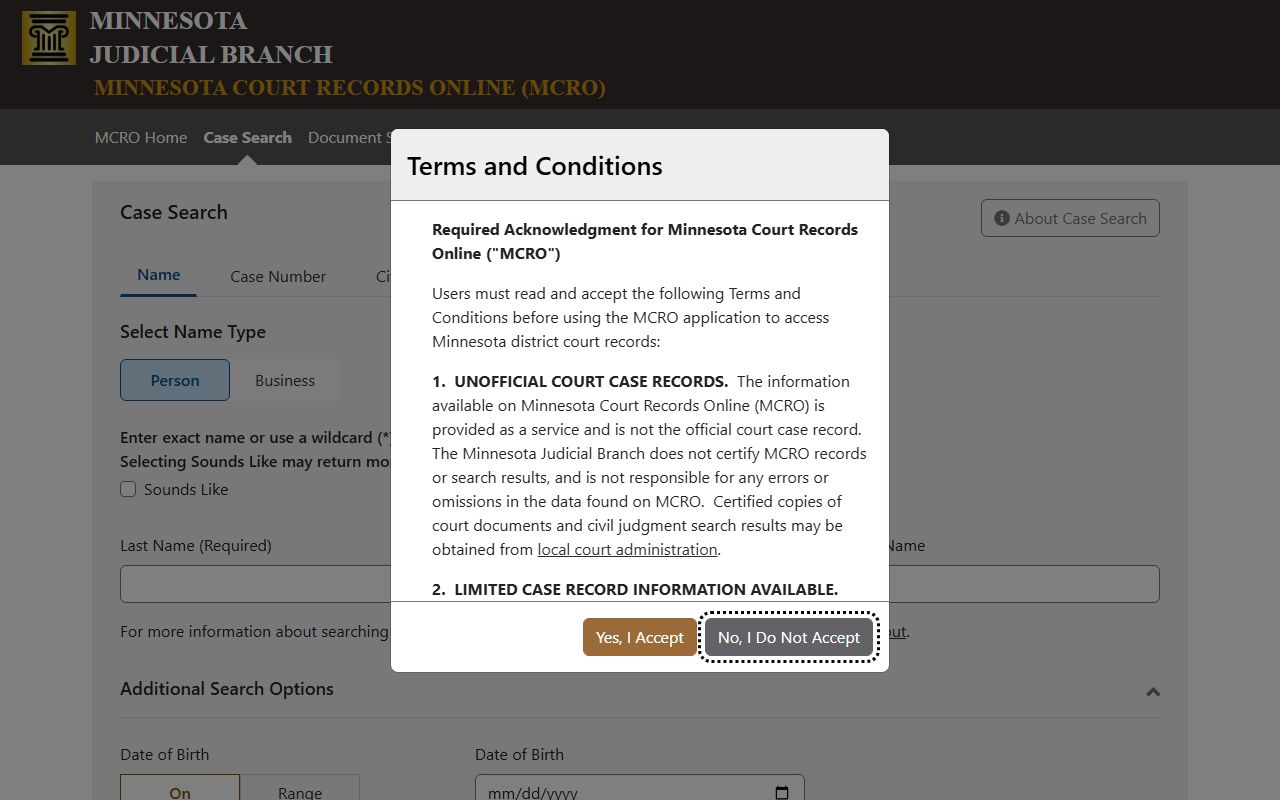
| Field Label | Type | Required | Notes / Format |
|---|---|---|---|
| Citation Number tab | Tab | Preferred | Best for a payable traffic or petty case. |
| Case Number tab | Tab | Alternative | Exact court case number. |
| Name tab | Tab | Optional | Pending cases may not return by name. |
| Court Location | County checkbox | No | Select Washington County. |
| Date Filed | Date or range | No | Narrow by filing date. |
To check a fine amount or a citation status by phone, call the Criminal and Traffic line at 651-413-8133.
Which Courts Handle Traffic Cases in Washington County
All Washington County traffic cases run through the District Court, but they split between two divisions. The Traffic Division processes cases that are payable or that do not need a court appearance. Offenses that require an appearance are handled by the Criminal Division. The split decides whether you can simply pay or must come to court.
The line for both payable traffic and fine payments is 651-413-8133. If a citation requires a court date, the case moves to the criminal side, and a serious charge like DWI is treated as a crime rather than a payable ticket.
Types of Traffic Cases on Record
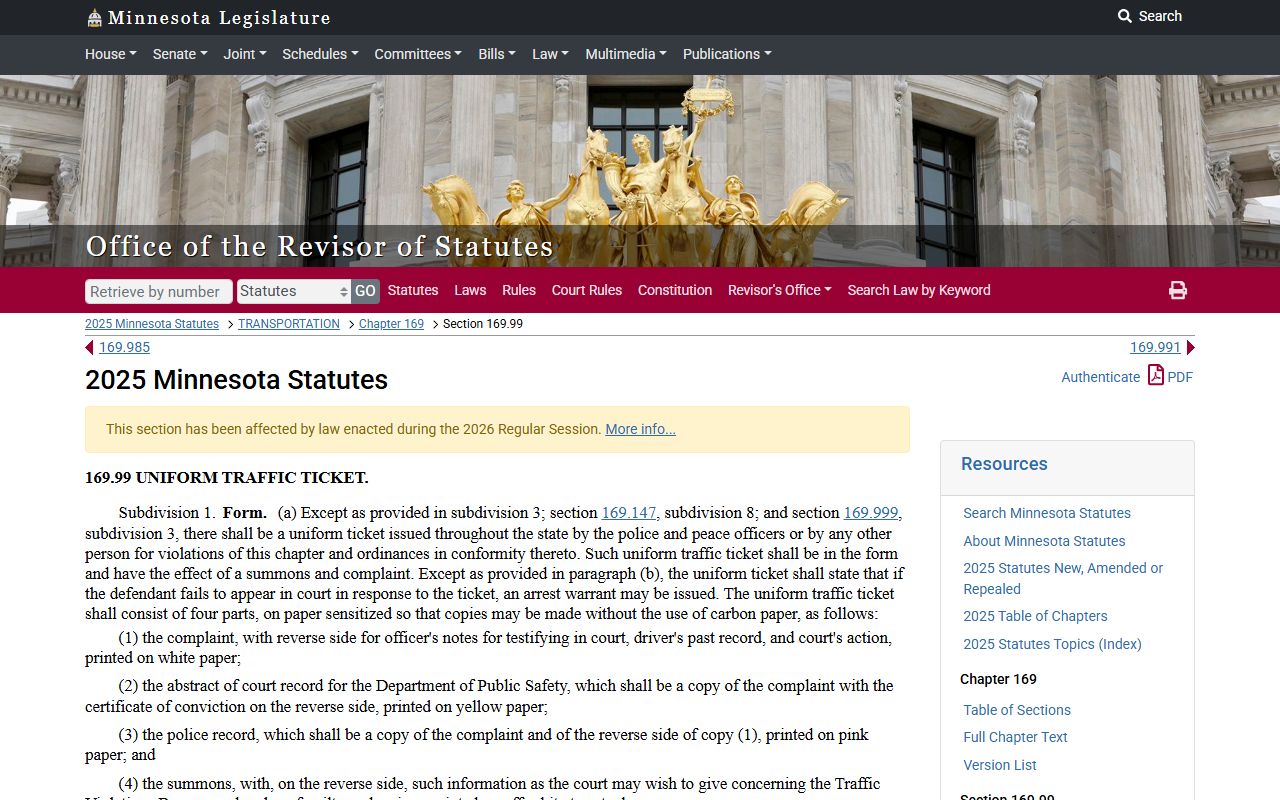
Traffic matters range from a minor parking or speed citation to a criminal driving charge. Many are petty misdemeanors, the lowest level, which carry a fine up to $300 and are not crimes. Some are misdemeanors or gross misdemeanors that need a court appearance. The uniform traffic ticket itself is governed by state law.
Juvenile traffic has a special rule. Under Minn. Stat. § 260B.225, children aged 16 or 17 charged with a petty misdemeanor traffic offense generally fall under adult court jurisdiction rather than juvenile court.
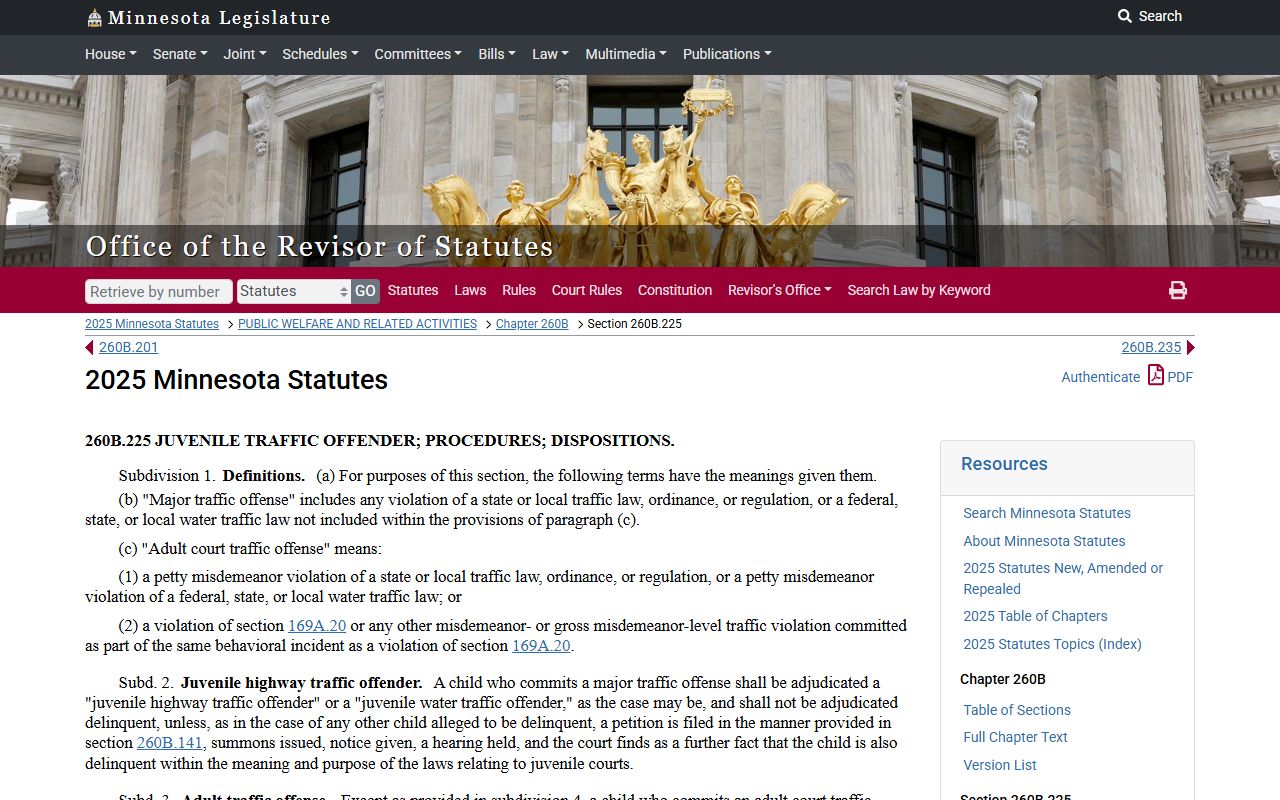
That rule keeps most minor teen traffic tickets in the same payable system as adult citations.
What Washington County Traffic Court Records Show
A traffic court record tracks the citation through the court. It is a case file, so it carries the citation and case numbers, the offense, the court events, and the result. The table below lists the fields a traffic case record usually shows.
| Field | What It Shows |
|---|---|
| Citation Number | The number printed on the ticket. |
| Case Number | Court-assigned ID for the traffic case. |
| Offense and Statute | The charged violation and its statute and level. |
| Court Date | Any scheduled hearing date. |
| Plea and Disposition | Plea entered and the outcome on the charge. |
| Fine and Payment Status | Amount owed and whether it is paid. |
| Register of Actions | Dated list of events in the case. |
The court record is separate from the driver record kept by the state, which is covered further down this page.
Searching by Citation Number vs by Name
The two main ways to find a traffic case have different strengths. A citation number points straight to one case and avoids the name-search limits. A name search casts a wider net but may miss a pending case with no conviction, since those do not return by defendant name.
When you have the ticket, use the citation number. When you do not, search the name and filter to Washington County, then confirm the match by date of birth or filing date. If a recent ticket does not appear yet, it may take a few days to post after the citation is entered into the court system.
Paying or Contesting a Washington County Traffic Ticket
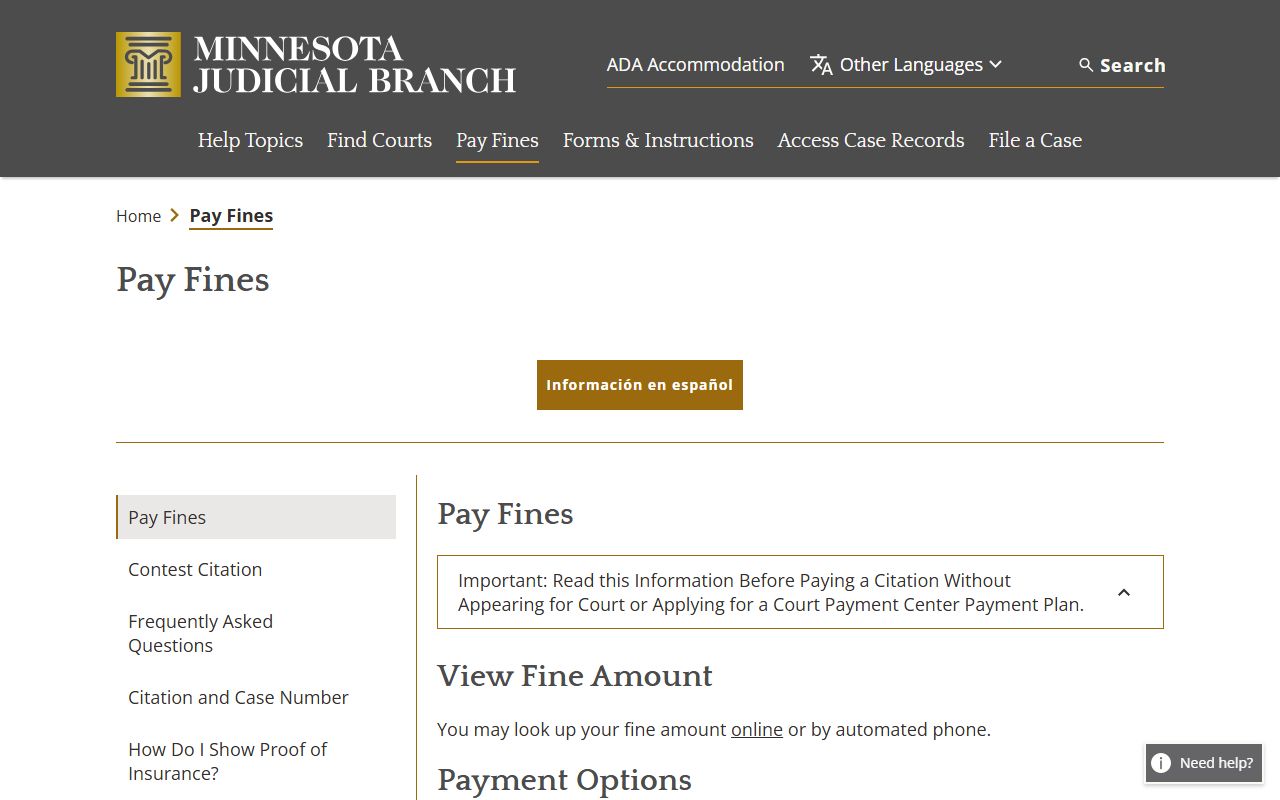
A payable citation gives you a choice within 30 days: pay the fine or schedule a hearing officer appointment. Paying the fine is entering a guilty plea and waiving trial rights, so think before you pay if you want to contest the charge. The Minnesota Judicial Branch Pay Fines page lays out the payment options.
- Read the citation and note the 30-day deadline to respond.
- To pay, use the online Make Payment link, the automated phone line, mail, or in person.
- To contest, do not pay; schedule a hearing officer appointment or a court date instead.
- For Washington County, ask the Court Payment Center about a hearing officer appointment.
- Keep proof of payment or the appointment confirmation.
The Minnesota Court Payment Center can be reached at 651-281-3219 or 800-657-3611, with mailed payments sent to P.O. Box 898, Willmar, MN 56201. A hearing officer can offer options such as a reduced fine, a payment plan, or a continuance for dismissal with prosecution costs.
Public Access Laws for Traffic Court Records
Traffic court records follow the same public access rules as other court files, under the Rules of Public Access to Records of the Judicial Branch. Most adult traffic cases are public and searchable through MCRO. Juvenile records are different and are limited by Minn. Stat. § 260B.171, which restricts public access to juvenile court records.
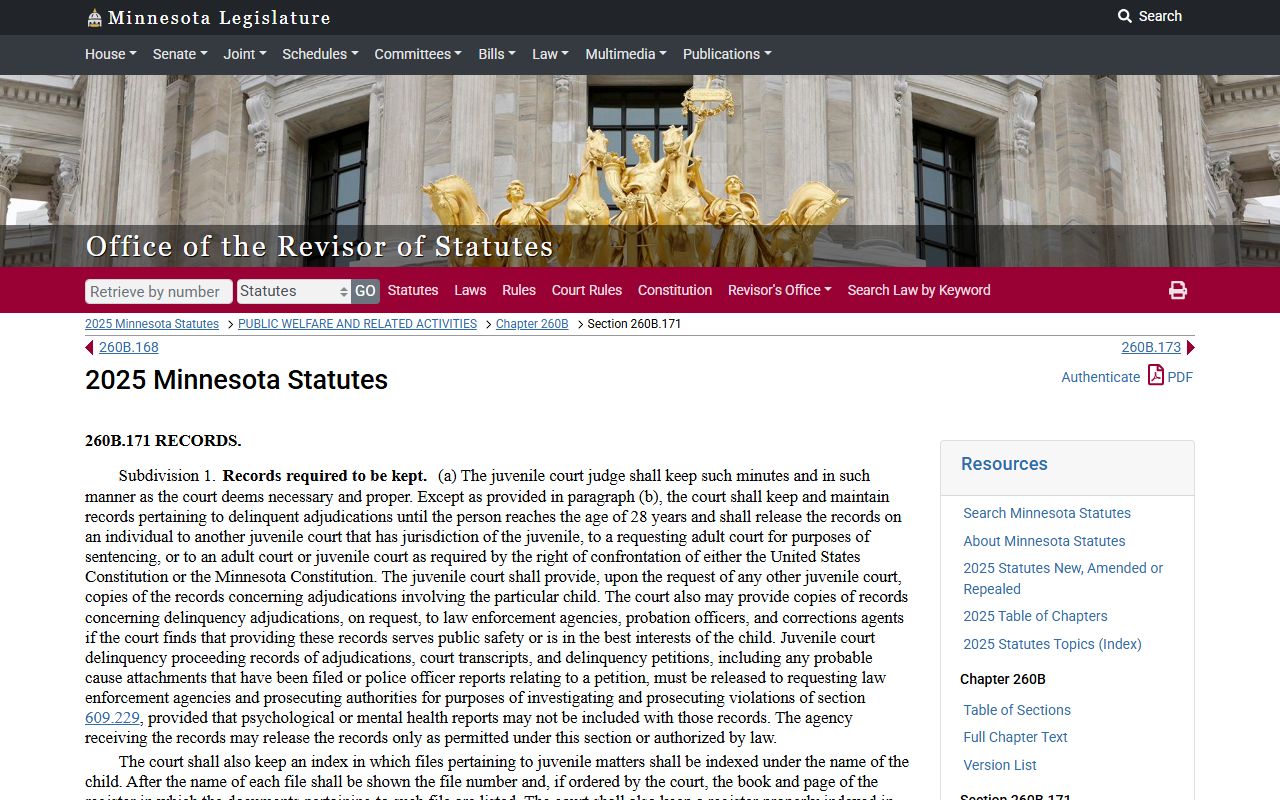
Because most 16- and 17-year-old petty traffic offenses sit in adult court, those tickets are generally public the way an adult citation would be, while true juvenile court matters stay restricted.
Court Traffic Records vs State Driver Records
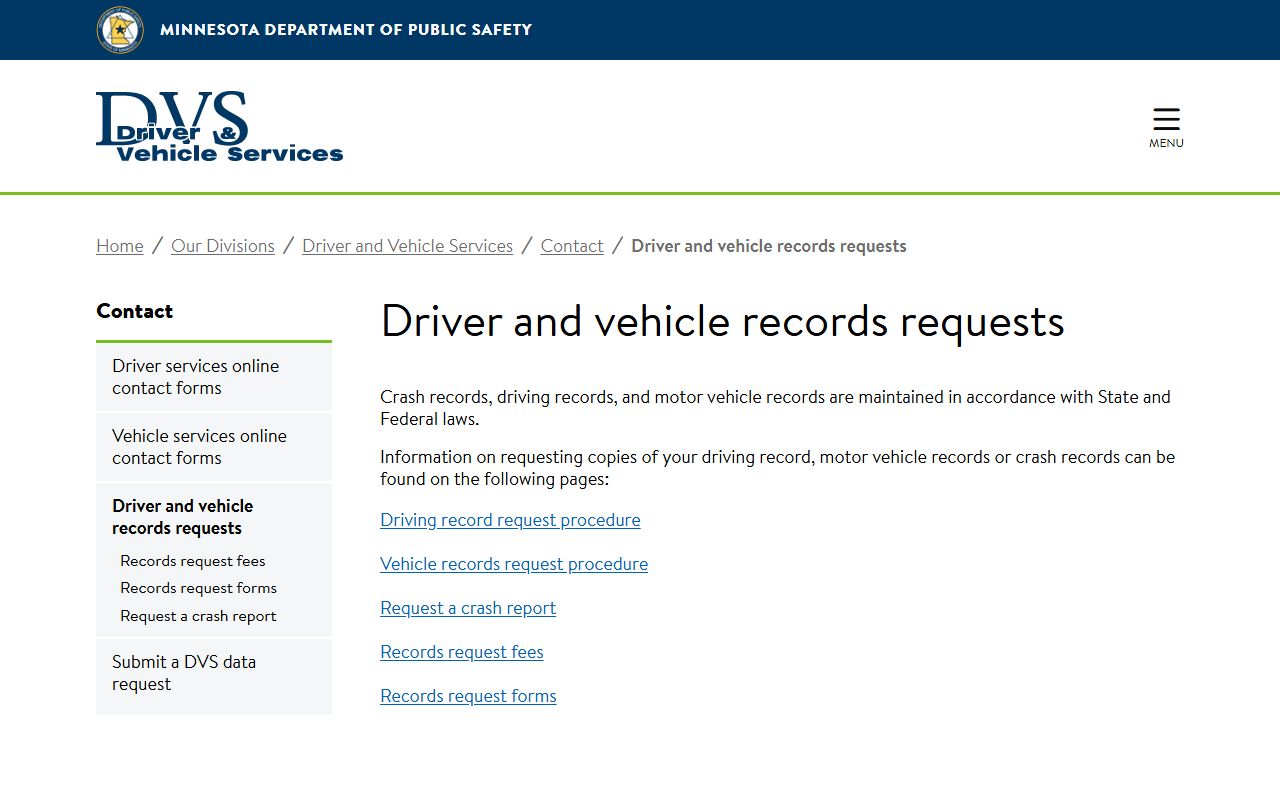
People often confuse the two records. The court traffic record is the case in District Court. The state driver record is the license history kept by the Minnesota Department of Public Safety, Driver and Vehicle Services. A ticket can appear as a court case and later show on the driving record if it ends in a reportable conviction. The comparison below shows the split.
| Feature | Court Traffic Record | State Driver Record |
|---|---|---|
| Held by | Washington County District Court | Minnesota DPS, Driver and Vehicle Services |
| Shows | Citation, case, plea, disposition, fine | License status, reportable convictions, suspensions |
| Where to get it | MCRO and Court Administration | DVS record request |
| How to fix an error | Court Administration or the judge | DVS records unit |
To request a driver record, use the DVS record request process rather than the court.
A crash report is yet another record. It is a confidential DPS record available only to authorized requestors, for a $5 fee, about three weeks after the incident.
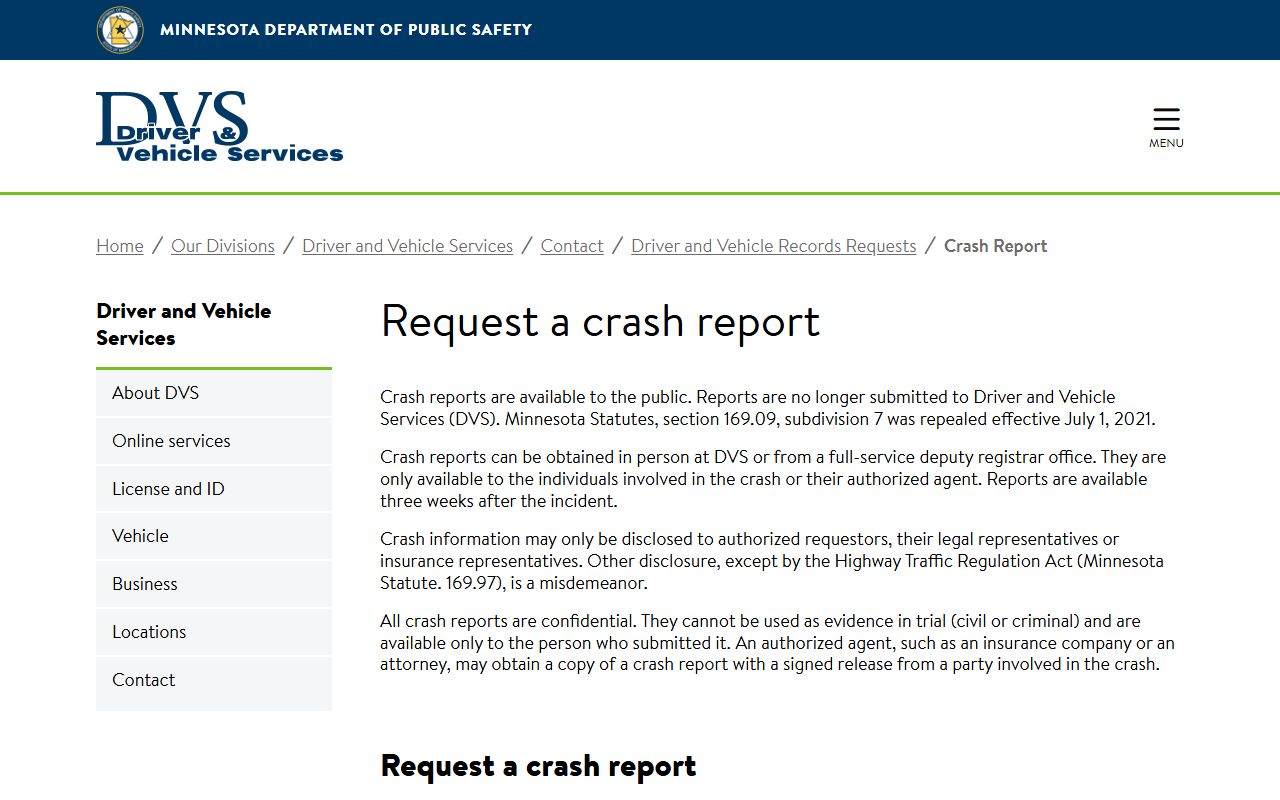
Many people who search for a traffic court record actually want a crash report, which the court does not hold.
CDL and Commercial Driver Records
Commercial drivers face stricter rules. Driver licensing in Minnesota is governed by Chapter 171, which sets license classes, suspensions, and reporting. A traffic conviction on a commercial license can carry heavier license consequences than the same offense would for a standard license.
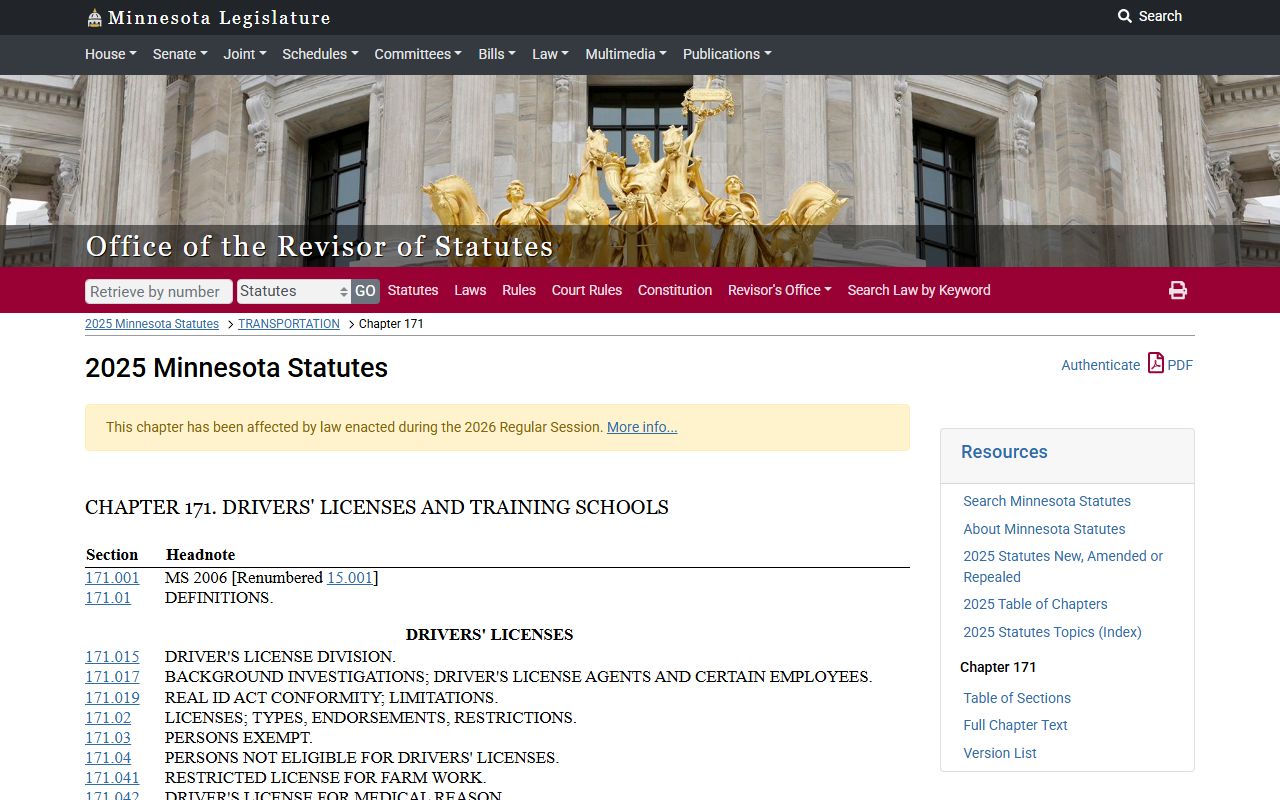
A CDL holder should be careful about simply paying a ticket, since a conviction reported to DVS can affect the commercial license. The court case and the license consequence are separate, so confirm both before deciding how to respond to a citation.
DUI and DWI Cases
Driving while impaired is not a payable traffic ticket. A DWI is a crime in Minnesota, so it is handled by the Criminal Division, not the Traffic Division. That means a court appearance, possible jail exposure, and a criminal case file rather than a simple fine.
Because a DWI is a criminal matter, it follows the rules on the arrest records page, including booking, charges, and the County Attorney's role. The driver-license side of a DWI runs through DVS, separate from the criminal case.
Continuance for Dismissal and Driver Improvement
Minnesota does not use a single statewide deferred-adjudication label for traffic the way some states do. The closest option comes through a hearing officer, who can offer a continuance for dismissal with prosecution costs, where the case is dismissed if conditions are met. The hearing officer can also offer a guilty plea with explanation, a reduced fine, or a payment plan.
A defensive driving course may help a driver's skills and, in some cases, an insurance rate, but it does not automatically change a court disposition or a driving record. Do not assume a course erases a conviction; confirm the effect with the court or DVS before relying on it.
Sealing or Expunging Traffic Records
Sealing a traffic record depends on the level of the offense. A petty misdemeanor is not a crime, so it is treated differently from a misdemeanor or higher. Criminal-level traffic offenses may be eligible for expungement under Chapter 609A, the same process used for other criminal records. The arrest records page covers expungement in more detail.
Remember that the court record and the driver record are separate. Even if a court record is sealed, the driver record at DVS follows its own rules. Clearing one does not automatically clear the other, so address both if a record is causing a problem.
Note: A sealed court traffic record does not automatically change the state driver record; the DVS record follows its own rules.
Fees for Traffic Record Copies
Fees depend on which record you want and which agency holds it. Court copies come from Court Administration, while driver and crash records come from DPS. The table below lists the common fees.
| Item | Amount |
|---|---|
| MCRO traffic case lookup | $0 |
| Certified copy of a Washington County court document | $14 |
| DVS driving record, own record | $10 |
| DVS driving record, another person | $10.50 |
| DPS crash report | $5 |
| Late penalty after 30 days | $5 |
| Added penalty after another 30 days | $25 |
Ignoring a citation adds penalties, can send the debt to collections, and may lead DVS to suspend the license, so respond within the 30-day window.