
Minnesota Government Data Practices Act
Minnesota does not use the federal term FOIA. The state law is the Minnesota Government Data Practices Act, found in Chapter 13. It presumes that government data are public unless a statute, a temporary classification, or federal law says otherwise. The Data Practices Office publishes a plain-English overview of how the Act works and what rights it gives.
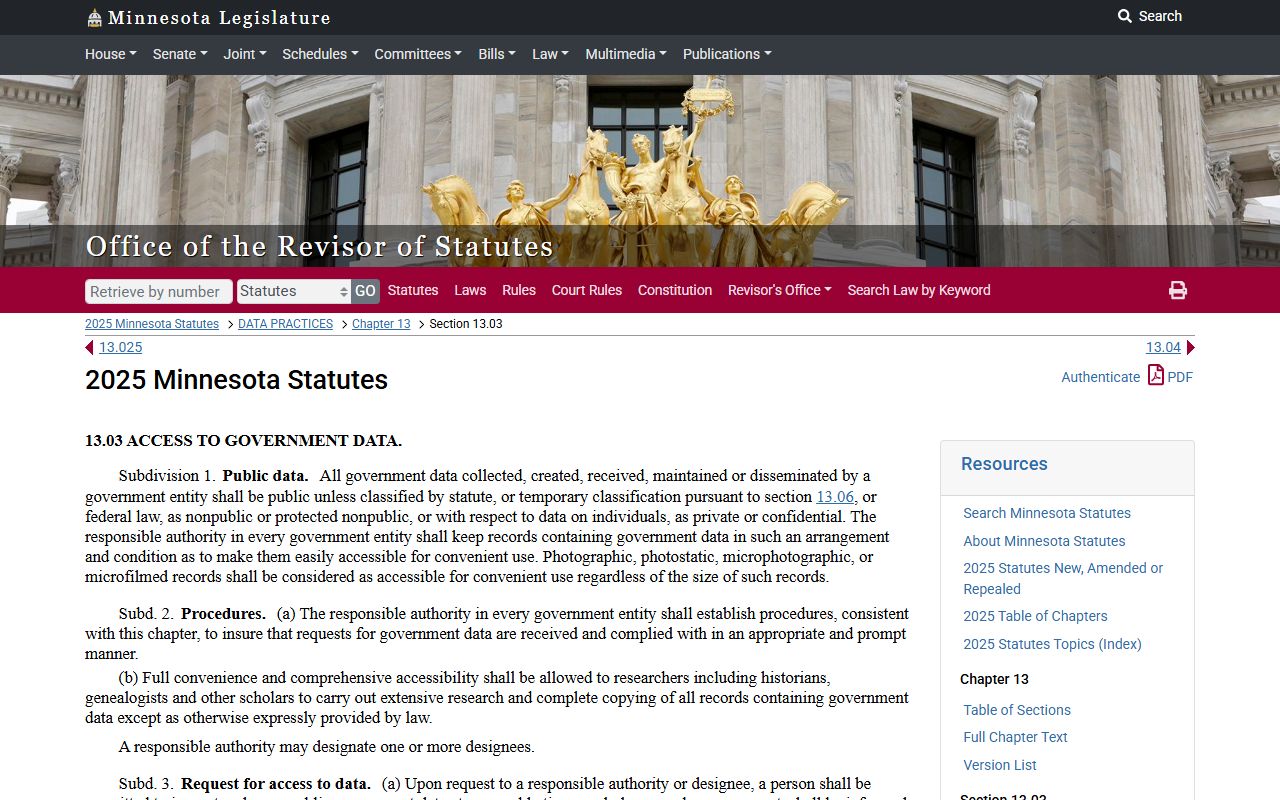
The starting point in the statute is Minn. Stat. § 13.03, which opens public government data for inspection and allows reasonable copy fees. For Washington County records held outside the courts, this is the general rule.
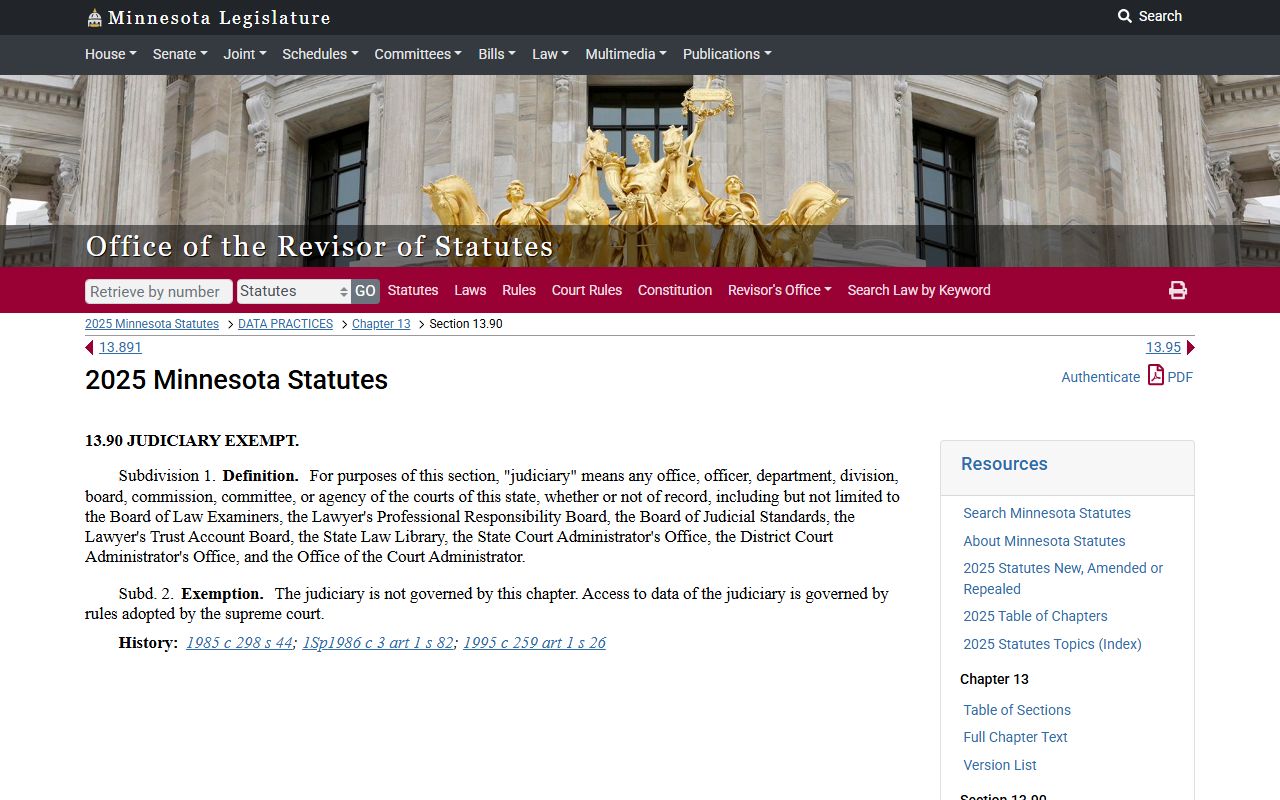
Court records are the exception. Under Minn. Stat. § 13.90, judiciary records follow rules adopted by the Supreme Court, not the Data Practices Act, so a court file is requested through MCRO or Court Administration.
What Records Washington County Maintains
Washington County offices hold a wide range of non-court records. Property Records and Taxpayer Services keeps property records, assessments, tax data, elections, licenses, passports, and vital records such as marriage certificates. The Sheriff's Office keeps arrest, jail, and incident data. Each department is the right source for its own records.
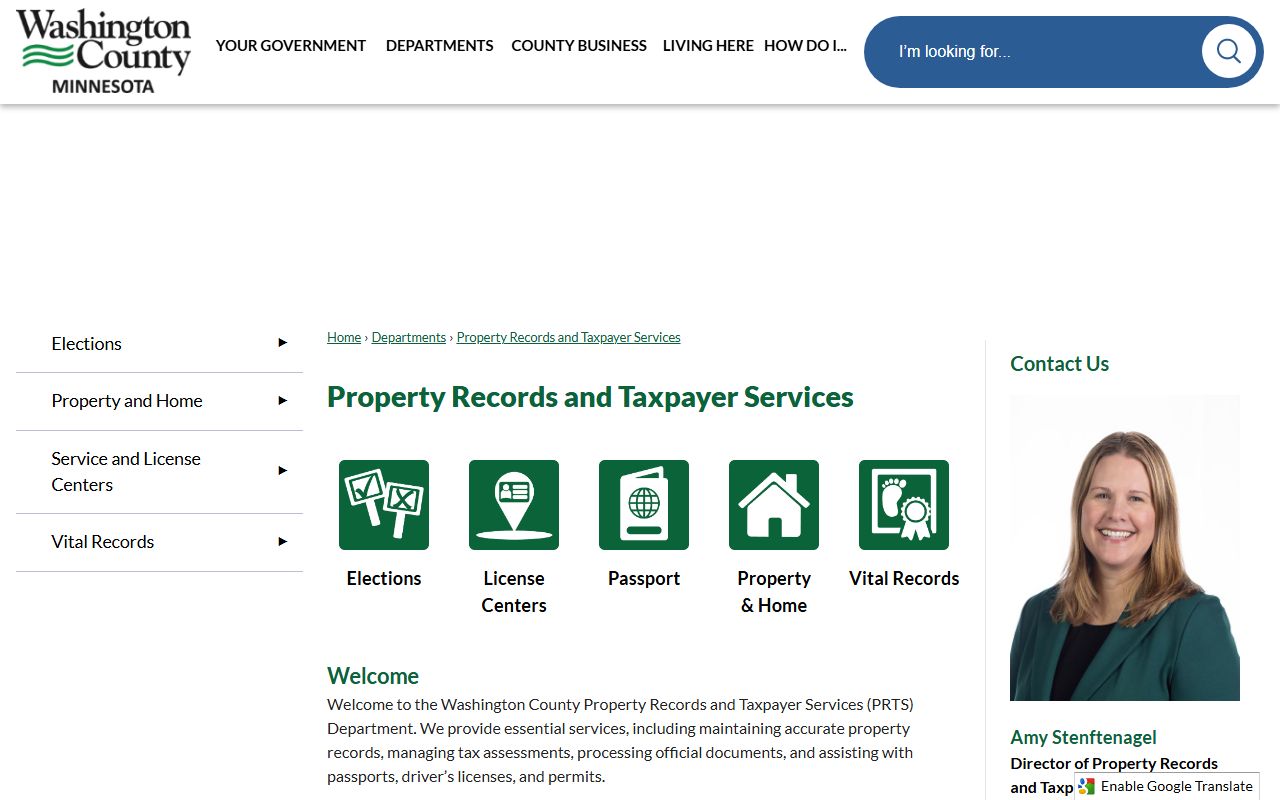
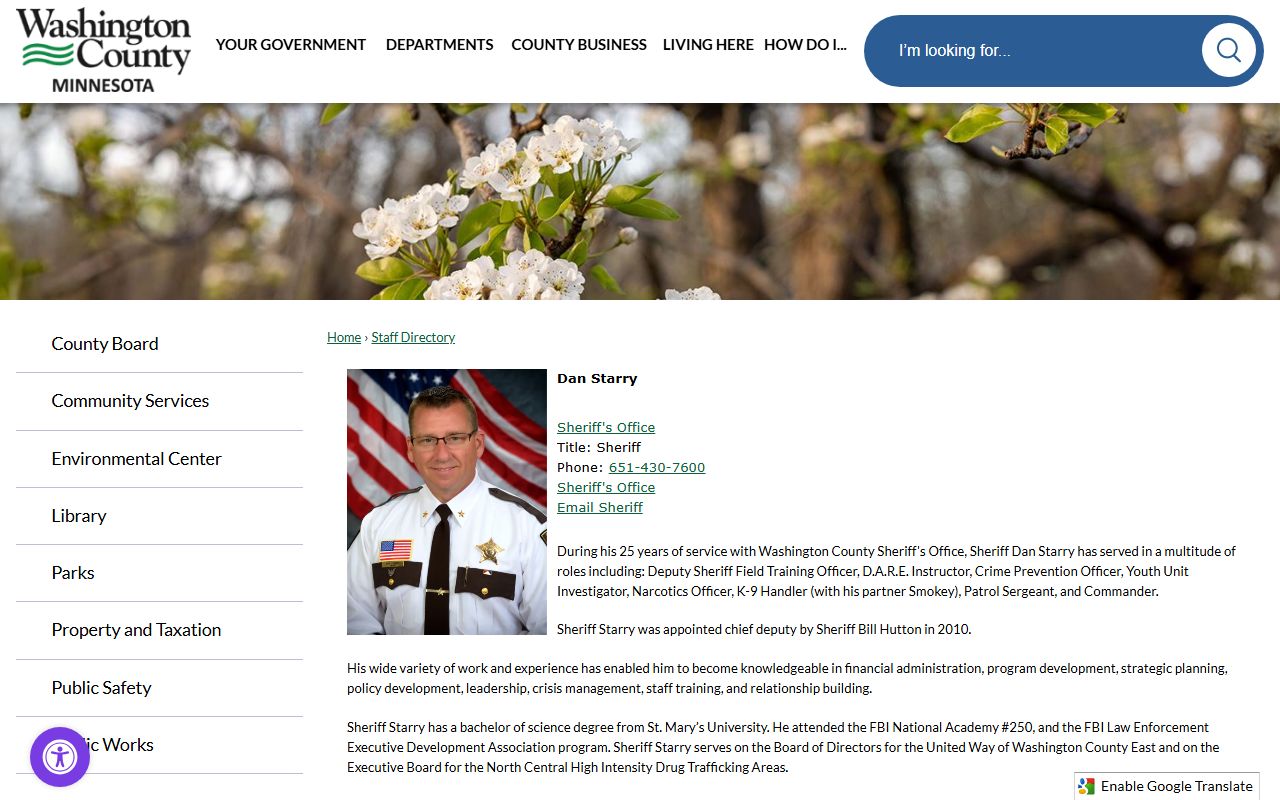
Property Records and Taxpayer Services is led by Director Amy Stenftenagel and can be reached at 651-430-6175. The Sheriff's Office, led by Sheriff Dan Starry, handles law enforcement data requests.
Court case files, by contrast, are not county data; they are held by Court Administration under the Judicial Branch.
How to File a Public Records Request in Washington County
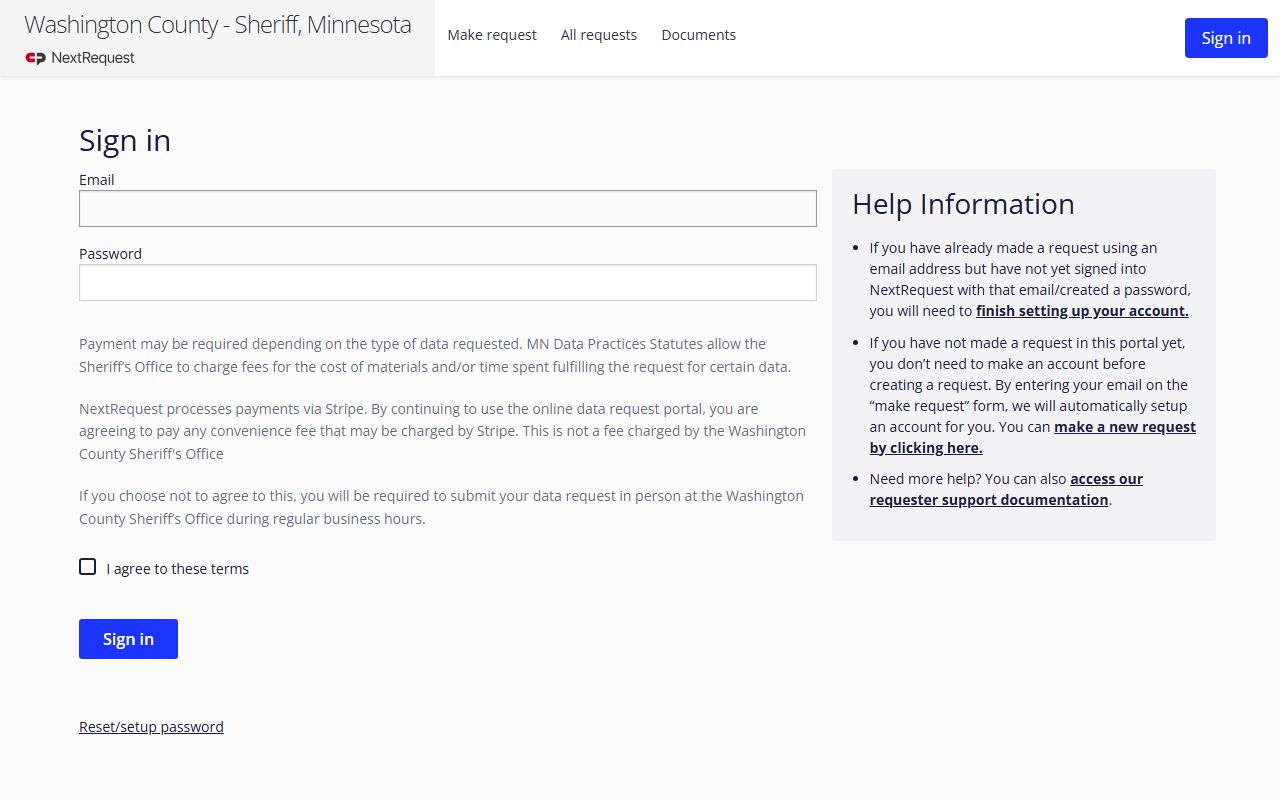
Pick the office first, then choose a method. The Sheriff's Office uses an online portal called NextRequest for police reports and other law enforcement data, with an in-person option for those who do not want to use the portal. Other departments take requests directly. The steps below cover a sheriff data request.
- Identify the record and the office that holds it.
- For sheriff data, open the NextRequest portal and start a request.
- Enter your email; a new user does not need an account first, since the email sets one up.
- Describe the record with enough detail to locate it, such as a date, location, or case number.
- Review any payment notice, then submit and track the request through the portal.
If you do not agree to the portal or payment terms, you may submit the request in person at the Sheriff's Office during regular business hours.
The county also maintains a formal Government Data Practices Act policy that explains who can make a request and where to find the forms.
Public Records Request Form Fields
The Sheriff's NextRequest portal collects a few core items. The table below lists the controls a requester will meet.
| Field / Control | Type | Required | Notes |
|---|---|---|---|
| Email / account | Text | For tracking | Entering an email sets up an account. |
| Make request | Web form | Yes | Describe the record you want. |
| Payment notice | Acknowledgment | Conditional | Payment may be required; a Stripe convenience fee may apply. |
| In-person alternative | Instruction | No | Submit in person if you do not accept portal terms. |
The convenience fee is charged by the payment processor, not by the county. A clear, specific description speeds up any request.
Response Timelines
The Data Practices Act expects a government entity to respond to a request in a reasonable time and an appropriate manner. Simple requests for public data are often filled quickly, while larger requests, redaction work, or older records can take longer. A request that mixes public and private data takes more time, because staff must separate or redact the parts that are not public.
For court records, the timeline is different again. Many MCRO documents are available instantly online, and Court Administration fills most copy requests at the time of the request unless multiple files or microfilm are involved.
The county keeps a written Government Data Practices Act policy that spells out who can make a data request and where to find the forms. The policy includes a section on who can make a request, a data practices notice, a fee schedule, and an appendix with the text of Chapter 13. A requester does not have to state a reason for wanting public data, though identifying the record clearly always helps. For private data about yourself, the office will ask for proof of identity before it releases anything.
Public Records Fees in Washington County
The law lets a government entity charge for the actual cost of copies and, in some cases, the staff time to gather and prepare data. Fees vary by office and by the size of the request. The table below lists common county copy fees and the court copy fees that apply to case files.
| Item | Amount |
|---|---|
| County standard copy, per page | $0.10 |
| County fax | $0.25 |
| Certified marriage certificate | $10 |
| Plain (uncertified) court copy | $0 |
| Certified copy of a Washington County court document | $14 |
| Sheriff data request | May include materials and staff time |
For a large or unusual request, ask the office for a cost estimate before it begins work.
Records That Are Exempt
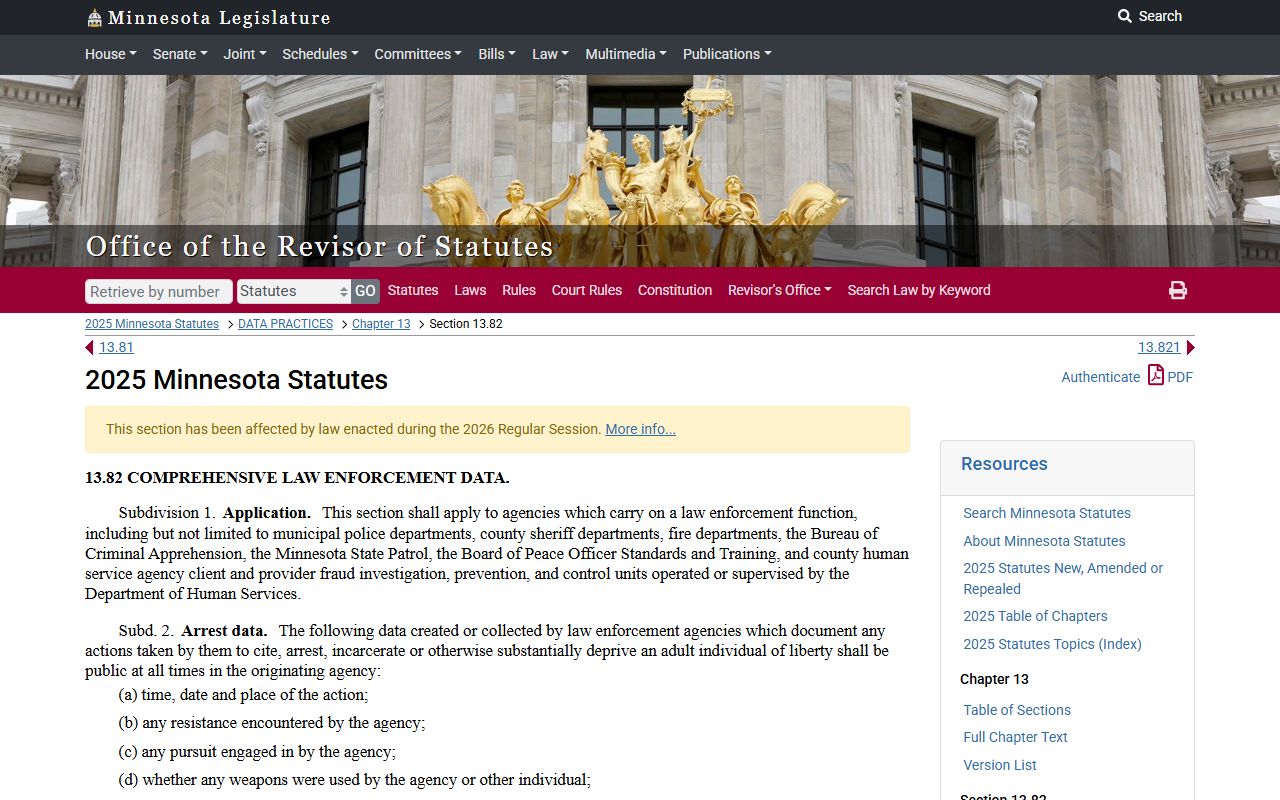
Not all government data is public. Law enforcement data is classified under Minn. Stat. § 13.82. Some of it, like the jail register, is public at all times, while active criminal investigative data can be not public. Arrest warrant indices are confidential until a person is in custody, served, or appears, unless the agency finds a public purpose for release.
Other closed categories include juvenile records, sealed and expunged cases, Social Security numbers, financial account numbers, and protected health and education data. Private data on a named person is generally released only to that person or with proper authorization.
If Your Request Is Denied
If an office denies a request or classifies data as not public, it should point to the statute behind the decision. The Data Practices Office offers guidance on challenges and appeals, including the right of a data subject to challenge the accuracy or completeness of data about themselves. The judiciary side runs differently, since court records follow court rules rather than the Data Practices Act.
Note: A denial should cite the statute that classifies the data; ask the office to name it so you know whether an appeal is worth filing.