
How to Look Up Washington County Jail Population Data
The clearest public number comes from the Sheriff's active adult inmate roster. Each version of the report stamps the date and time and lists the count of active inmates at that moment. That count is the current jail population for adults. The roster does not total bookings for the year, and it is not an average, so it should be read as a single snapshot.
For deeper numbers, the public turns to other sources. The Minnesota Department of Corrections inspects county jails and issues compliance reports. County budget documents and sheriff annual reports can hold longer-term figures. National jail statistics come from federal research bodies. Each source answers a different question, and none of them is updated minute to minute the way the roster is.
A snapshot makes the idea concrete. On one recent roster pull, the report listed 98 active adult inmates. Against the 228 adult beds, that is about 43 percent of listed capacity at that moment. The number is real, but it is one point in time. An hour later, after a few bookings and releases, the count can read differently, which is exactly why a single figure should not stand in for the jail's typical population.
This page covers population data, not individual lookups. To find a specific person, the roster and court records are the right tools, covered on the inmate records page.
Washington County Jail Capacity Overview
The Washington County Jail is a 228-bed direct supervision facility that opened in June 1993. It holds adult male and female inmates, both pretrial and sentenced. The Jail Division also runs a small temporary juvenile holding facility. The table below lists the county's detention capacity.
| Facility | Capacity | Notes |
|---|---|---|
| Washington County Jail | 228 beds | Direct supervision; opened June 1993; adult male and female; pretrial and sentenced. |
| Temporary Juvenile Holding | 5 beds | State-licensed; up to eight business days for qualifying juveniles. |
The jail sits in the Law Enforcement Center at 15015 62nd Street North in Stillwater, next to the courthouse campus.
Average Daily Population
Average daily population, or ADP, is the mean number of people held across a period, such as a month or a year. It smooths out the daily ups and downs that the live roster shows. ADP is the figure planners use for staffing, budgets, and capacity decisions.
Washington County does not publish a public ADP table on its jail pages. The roster gives a daily count, but a daily count is not an average. A reliable ADP for the county would come from a sheriff annual report, a county budget document, or a state corrections statistical report rather than from a single roster pull.
Note: A one-day roster count is a snapshot, not an average; do not treat a single day's number as the jail's typical population.
Demographic Breakdown
A demographic breakdown sorts the jail population by traits like age, sex, and race. Some county dashboards publish these splits. The Washington County public roster does not. It lists names and booking data, with no totals for race, sex, or age, and no count by charge type.
Because the county does not post a demographic table, this page does not present one. Inventing a breakdown would be worse than leaving it out. A person who needs demographic detail should request it from the Sheriff's Office through a data request, or look to a state corrections report that compiles facility-level figures.
Pretrial vs. Sentenced Population
A jail holds two broad groups. Pretrial detainees are held while their cases move through court, often because bail was not posted. Sentenced inmates are serving a jail term after a conviction. The mix matters, because pretrial numbers track arrests and bail decisions, while sentenced numbers track court outcomes.
Washington County holds both groups, and its programs show it. Work release and electronic home monitoring are ordered by a sentencing judge for inmates who qualify, which points to a sentenced population. Bail and first-appearance steps point to a pretrial population. The county does not publish a public split between the two, so the exact ratio is not available from official roster data.
Misdemeanor vs. Felony Population
Charge level shapes who stays in jail and for how long. Minnesota sorts offenses into petty misdemeanor, misdemeanor, gross misdemeanor, and felony. A petty misdemeanor carries a fine up to $300 and is not a crime. A misdemeanor can bring up to 90 days. A gross misdemeanor can bring up to 364 days. A felony carries a year or more, and a long felony sentence usually moves to state prison rather than the county jail.
The county roster does not tag each inmate with a charge level, and it does not total inmates by offense class. To connect a person to a charge, search the court file in MCRO. The arrest records page explains the link between a booking and a charge.
Mental Health and Medical Population
Jails carry a share of inmates who need medical or mental health care. The Washington County Jail runs a medical unit with exam rooms and a dentist office, and a registered nurse is onsite on weekdays with one on weekends. Chemical dependency services are provided through Canvas Health, and mental health concerns may be referred to the jail medical unit.
The county does not publish a count of inmates receiving medical or mental health services, and privacy law limits what can be shared about any individual. The presence of these services shows the need exists, but a public population figure for this group is not posted.
National and State Context
National jail population data comes from federal research, chiefly the Bureau of Justice Statistics, while research groups like the Vera Institute compile county-level estimates. These sources track jail population per capita, pretrial share, and trends over time across the country. They are the right place to compare one county against state and national patterns, because they use a consistent method.
Any per-capita comparison needs a population base. The U.S. Census Bureau puts Washington County's 2025 population estimate near 286,895, with a 2020 census count of 267,568, which makes it the fifth most populous county in Minnesota.
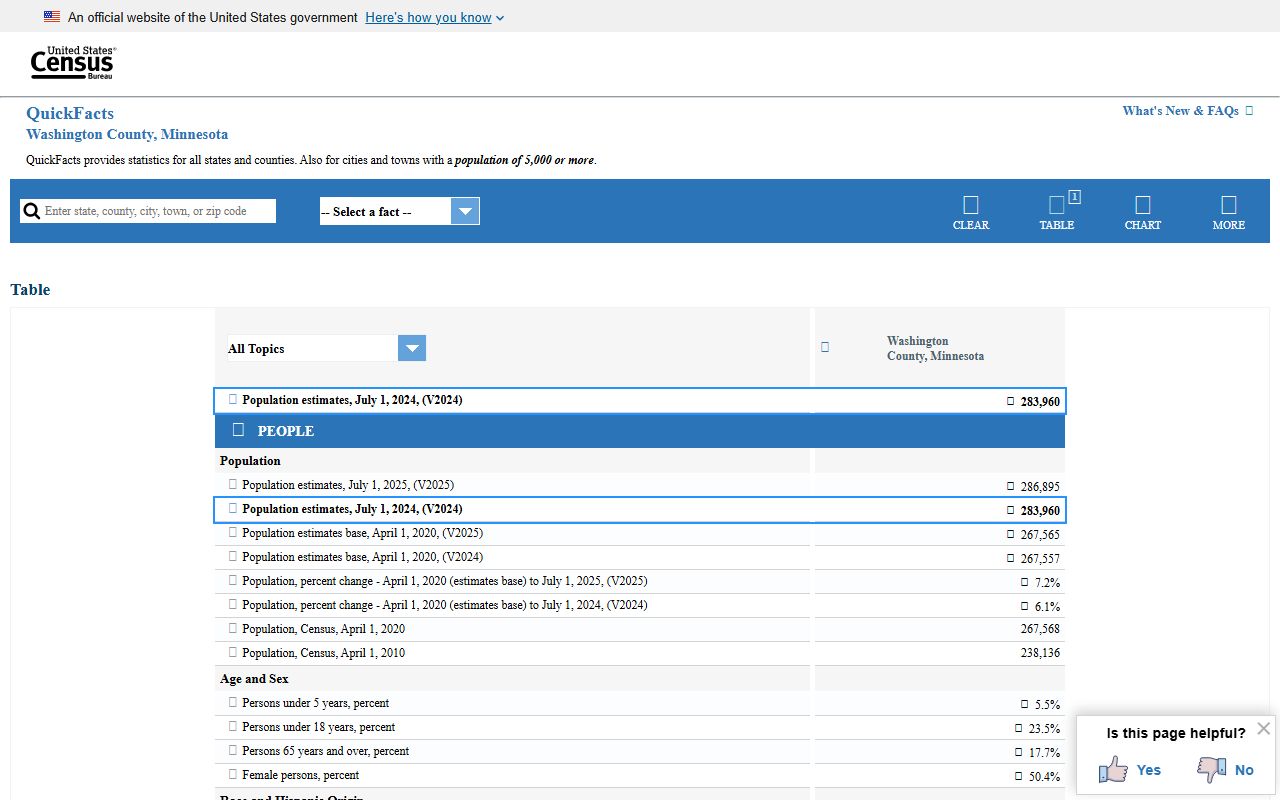
Those county figures are population, not jail counts. Treat the jail roster number as county-specific and the per-capita rates from federal and research sources as state or national context.
Population Trends Over Time
Jail population is never flat. It rises and falls with arrests, warrants, bail decisions, court calendars, sentencing, work release, home monitoring, holds, and transfers to the state Department of Corrections. A holiday weekend, a court backlog, or a policy change can shift the count within days.
Washington County does not publish a five-year trend table on its jail pages, so a long-term line should be built from annual reports or state corrections data rather than from repeated roster pulls. The roster is excellent for today's count and poor for a multi-year trend.
Searching for Washington County Inmate Records by Name
This page is about population data, not individual records. To look up a specific person, use the active jail roster and the court file, both covered on the inmate records page. For release timing and notifications, see released inmates.
Where the Data Comes From
Knowing the source helps you trust the number. The active roster comes straight from the Sheriff's jail system and is a live snapshot. The Minnesota Department of Corrections inspects the jail and issues compliance reports; a 2025 inspection was issued to Jail Administrator Roger Heinen, Sheriff Dan Starry, and County Administrator Kevin Corbid under the state rule for local adult detention facilities.
Longer-term figures, such as ADP or bookings per year, would come from county budget documents, sheriff annual reports, or state statistical reports. National comparisons come from the Bureau of Justice Statistics and research institutes. When a number is not on an official county page, the honest answer is that it is not published, not a guess.